School Medicaid cuts are becoming one of the most important education and public health issues of 2026. When people hear the word Medicaid, they often think only about doctor visits, hospitals, or insurance cards. But Medicaid also helps fund health services inside schools, including nursing support, therapy, mental health care, screenings, assistive equipment, and services for students with disabilities.
That means cuts to Medicaid do not stay inside hospitals or state health agencies. They can reach classrooms, school nurse offices, special education programs, rural districts, and families that already face barriers to care. For CutsHurt.org, this is exactly the kind of issue that shows how budget decisions become human consequences. A line item may look technical on paper, but in real life it can decide whether a child gets speech therapy, whether a school nurse is available, or whether a student receives mental health support before a crisis grows.
This article connects naturally with existing CutsHurt.org topics like Healthcare Budget Cuts 2026, Community Health Center Funding 2026, and Housing Assistance Cuts 2026. Schools, clinics, hospitals, housing programs, and food assistance are not separate in a family’s daily life. They are connected safety nets.
Why School Medicaid Cuts Matter in 2026
Schools are often the most consistent place where children can be seen, supported, and connected to care. A child may not have easy transportation to a clinic. A parent may not be able to miss work for multiple appointments. A family may live in a rural area with provider shortages. But that same child may see a school nurse, counselor, speech-language pathologist, occupational therapist, or social worker during the school day.
Medicaid helps make that possible. In many districts, Medicaid reimbursement supports services for eligible students, especially students with disabilities. It can also support broader school-based health services in states that allow expanded billing. When this funding weakens, schools may be forced to cover the gap from already strained education budgets.
Recent 2026 policy analysis from Georgetown University’s Center for Children and Families explains that state leaders may face hard choices as federal cuts reduce available funding. Because K-12 education is the largest state spending category and Medicaid is one of the largest health spending categories, both can be pushed into competition when states try to balance budgets. Readers who want an outside source can review Georgetown CCF’s report on school Medicaid programs and K-12 funding.
Medicaid helps fund health services students use every day

The phrase “school Medicaid cuts” may sound abstract, but the services are very real. Medicaid can help pay for nursing care, medication support, chronic disease management, mental health counseling, speech therapy, physical therapy, occupational therapy, vision and hearing screenings, assistive technology, and care coordination. For many students, these are not extras. They are the supports that make learning possible.
A child with asthma may need help managing symptoms during the school day. A student with diabetes may need monitoring. A child with a disability may need therapy to participate more fully in class. A teenager struggling with anxiety may need access to a school-based mental health provider. If funding disappears, the need does not disappear with it. The burden shifts to families, teachers, local districts, and already stretched community providers.
1. School nurses may be stretched even thinner
School nurses are often the first line of defense for student health. They handle medication, injuries, chronic illness, screenings, parent calls, emergency response, and health education. In some districts, one nurse may already cover multiple schools. If Medicaid reimbursement drops or state budgets tighten, nurse staffing can become even harder to protect.
That matters because school nurses do more than respond to emergencies. They help prevent emergencies. They notice patterns, connect families to care, support students with health plans, and help teachers understand medical needs. Cutting this support can make schools less safe and less prepared.
2. Mental health support can become harder to access
Student mental health is already a serious concern across the country. Schools often provide the most accessible support for children and teens who may not otherwise receive counseling. Medicaid can help fund school psychologists, counselors, social workers, and behavioral health services for eligible students.
If school Medicaid cuts reduce mental health capacity, the harm may not show up immediately in a budget meeting. It may show up later as more absences, classroom disruptions, crisis referrals, emergency room visits, family stress, and untreated trauma. Cutting early support is often a false saving because the crisis response later is more expensive and more painful.
Students with disabilities face the highest risk
Students with disabilities are among the most directly affected when school health funding is weakened. Many receive services through an Individualized Education Program, including speech therapy, occupational therapy, physical therapy, nursing care, assistive equipment, or specialized transportation. Medicaid reimbursement can help districts provide these legally required and educationally necessary supports.
When funding shrinks, schools still have obligations. But the money has to come from somewhere. Districts may cut other staff, delay programs, reduce prevention services, or shift resources away from broader student supports. This is how one cut spreads across the whole school system.
3. Cuts can shift costs onto families and local schools
When federal or state funding is reduced, policymakers may claim they are saving money. But families and local communities often end up paying the difference. A parent may need to take more time off work to find outside therapy. A district may need to pull money from classroom programs. A local clinic may face longer waitlists because more children are pushed out of school-based services.
This pattern is similar to what CutsHurt.org has already explained in SNAP Cuts 2026. When one safety net is weakened, another part of the community absorbs the pressure. Schools are no different. They become the place where healthcare gaps, food insecurity, housing instability, and family stress all show up at once.
How School Medicaid Cuts Affect Classrooms and Communities
School Medicaid cuts do not only affect students who receive direct services. They can affect the entire school environment. If nurses, therapists, counselors, and support staff are reduced, teachers may be left handling more student needs without enough help. Students may miss more class time. Parents may receive more emergency calls. Administrators may spend more time managing crises instead of improving learning.
Health and learning are connected. A child who cannot hear clearly, see the board, manage asthma, receive therapy, or access mental health support is not starting from the same place as a child whose needs are met. Cutting health services inside schools can deepen inequality because the students most affected are often those with the fewest outside options.
What communities can do before services disappear
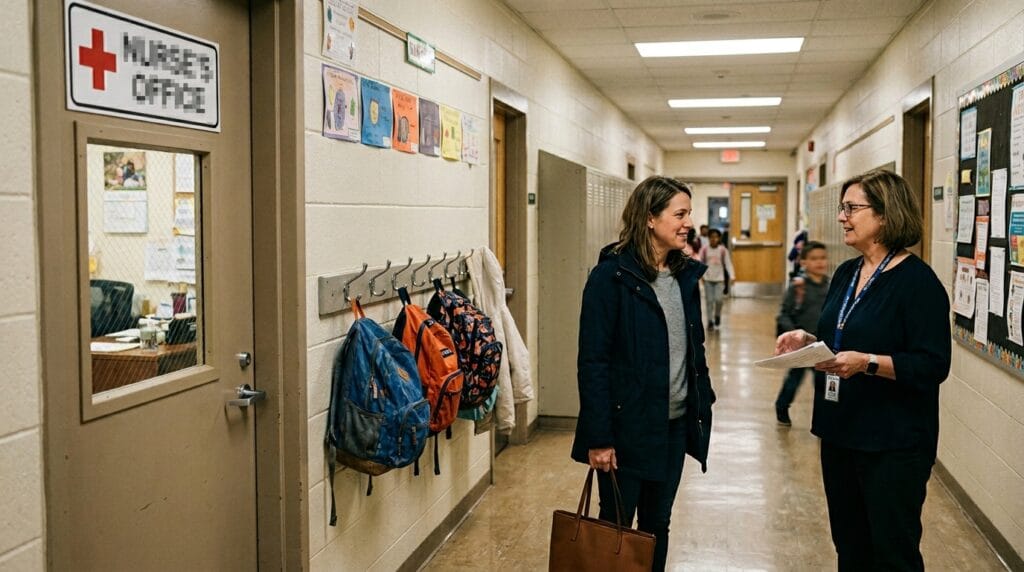
Communities do not have to wait until staff are laid off or programs are closed. Parents, educators, healthcare workers, and advocates can ask direct questions now. How much Medicaid reimbursement does the district receive? Which services depend on it? How many students benefit? What happens if reimbursement drops? Are state leaders expanding school Medicaid billing options or leaving federal dollars unused?
Local leaders should also track warning signs. These include fewer school nurses, longer therapy waitlists, reduced counseling availability, fewer screenings, delayed evaluations, larger caseloads, and more referrals to outside providers. These are early signals that cuts are already reaching students.
4. Protecting school health services is prevention
The strongest argument against school Medicaid cuts is simple: school health services prevent bigger problems. Screenings can catch issues early. Nurses can prevent health complications. Therapists can support development. Counselors can intervene before emotional distress becomes a crisis. Assistive technology can help students participate more fully in learning.
This prevention logic also connects with Public Health Funding Cuts in 2026. Prevention is often invisible when it works. No crisis happens. No emergency headline appears. But when prevention is cut, the damage becomes visible later in the places families depend on most.
School Medicaid cuts are not just a healthcare issue. They are an education issue, a disability rights issue, a rural access issue, and a public health issue. They affect whether children can learn safely, whether families can get support close to home, and whether schools can respond to real student needs.
If policymakers want stronger schools, they cannot weaken the health supports that help students show up ready to learn. If they want healthier communities, they cannot treat school nurses, counselors, therapists, and screenings as optional expenses. These services are part of the foundation that keeps children stable, families supported, and classrooms functioning.
Cuts hurt most when they target the quiet systems people only notice after they are gone. School Medicaid is one of those systems. Protecting it means protecting students before problems become emergencies, before families are left alone, and before classrooms are asked to carry more than they can reasonably bear.