Public health lab cuts in 2026 may sound technical, but the real-world damage is simple. When testing capacity shrinks, communities lose time. That lost time can mean a disease spreads farther before anyone sounds the alarm. It can mean a clinic keeps seeing patients without clear answers. It can mean local health departments know something is wrong, yet still cannot confirm what they are dealing with fast enough to respond well.
That is why this topic matters right now. Most people notice public health only when a crisis breaks into the headlines. A measles outbreak grows. Tuberculosis cases rise. Emergency rooms get overwhelmed. Parents start asking whether their child was exposed. Yet by the time fear becomes visible, the quieter systems underneath the response may already be under strain. Public health labs are one of those systems. They do not often get public attention until they are cut, delayed, or forced to do less with less.
This article fits naturally with what CutsHurt.org already publishes. It builds on How Budget Cuts Jeopardize Public Health and Safety, Healthcare Budget Cuts 2026: Why Medicaid Cuts Are Triggering Hospital Layoffs, Rural Healthcare Funding Cuts, The Hidden Crisis: Budget Cuts and Mental Health Services, Public Safety Compromised, and The Silent Crisis: Impact of Federal Cuts on Medical Research. Instead of repeating those articles, this one focuses on the lab-and-testing layer that often fails before the public even realizes a health emergency is taking shape.
Why Public Health Lab Cuts Matter More Than Most People Realize

Public health lab cuts in 2026 matter because testing is not a side function. It is part of how a community sees what is happening in front of it. Labs help confirm infections, identify patterns, support outbreak investigation, and give local health departments the information they need to act. When that capacity is reduced, the problem is not only slower paperwork. The problem is slower truth.
Early warning systems fail quietly
One reason lab cuts are so dangerous is that they do not usually create instant chaos on day one. A building does not collapse. A hospital sign does not suddenly say “closed.” Instead, the damage appears through delays, narrower testing menus, fewer staff, and gaps that force local teams to improvise. That makes the problem easy to ignore until a community starts feeling the consequences.
A pause in federal testing ripples outward
Federal testing changes do not stay at the federal level. When a national system pauses or drops certain diagnostic support, local and state labs do not magically gain extra staff, equipment, or expertise overnight. Some communities already run on thin margins. Others depend on federal backup for harder or less common tests. When that backstop weakens, smaller systems feel the strain first.
That matters especially in places that were already under pressure. A hospital fighting layoffs cannot simply absorb new public health duties. A rural region with one major facility cannot create a high-capacity lab overnight. A community clinic facing unstable funding cannot solve countywide surveillance gaps by itself. That is why internal articles on hospital layoffs and rural closures work so well here. The same funding pressure that hollows out treatment capacity can also hollow out detection capacity.
Local outbreaks get harder to catch early
Outbreak response depends on early detection, not just treatment after the fact. If testing slows down, cases may stay unconfirmed longer. That delay changes everything. Contacts are harder to trace. Risk communication gets fuzzier. Local officials lose confidence when speaking publicly because the data is incomplete. Families receive mixed signals. And preventable spread can continue in schools, workplaces, shelters, and crowded homes before the system catches up.
This is one reason public health lab cuts in 2026 feel so urgent. Communities are not facing this in the abstract. Measles cases are already high in 2026, and local officials have openly warned that funding cuts can let diseases go undetected longer. When detection slows, the price gets paid later in hospital pressure, deeper spread, and more fear. That is the same pattern CutsHurt.org already highlights in its broader public-health and safety content.
Lab cuts do not stay inside the lab
Another mistake people make is assuming lab problems are separate from everyday healthcare. They are not. When testing gets slower or more limited, the ripple effect moves through the rest of the system. Clinicians wait longer for answers. Patients wait longer for guidance. Public messaging becomes less precise. Emergency departments may see more people who do not know whether they are contagious or what they were exposed to. Community trust also drops when people feel that officials are reacting late or giving incomplete information.
The same logic applies beyond infectious disease. Public health labs support screening, surveillance, and investigation that help shape how communities respond to threats. When those systems weaken, the damage spreads into schools, emergency planning, behavioral health coordination, and local government. That is why this topic belongs on a site like CutsHurt, not just on a technical public health blog. The issue is not only science. It is social impact.
What Communities Should Demand Before the Next Failure Gets Worse
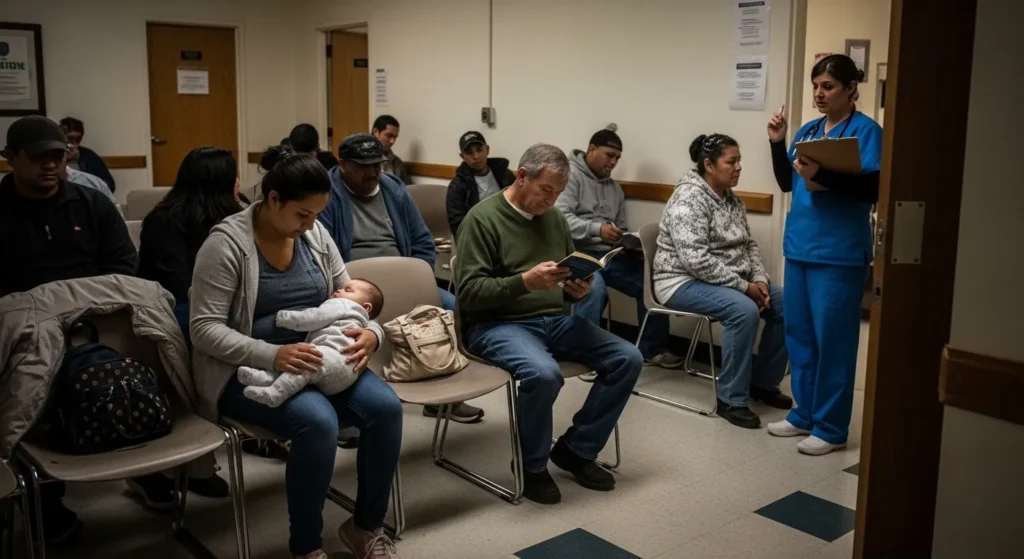
The good news is that this problem is not invisible once you know where to look. Communities can ask better questions, demand more transparent answers, and connect lab capacity to outcomes people already understand. The worst response is to wait until an outbreak or service breakdown becomes impossible to ignore. By then, the missing capacity is much harder to rebuild quickly.
How to respond before the next breakdown
The first step is to stop treating labs as background infrastructure that policymakers can quietly trim without public consequences. Testing capacity should be discussed the same way communities discuss ambulance response times, school closures, or clinic access. It is part of the safety net. If it weakens, people need to know what is being lost, where the gap will land, and who is expected to cover it.
Questions to ask local and state leaders
Advocacy works better when it is specific. Instead of saying “protect public health,” communities can ask:
- Has local or state lab staffing been reduced in the last 12 months?
- Which tests or surveillance functions have been paused, delayed, or moved?
- How long are current turnaround times for urgent infectious-disease testing?
- What backup exists if federal testing support is reduced?
- Which communities face the highest risk if lab capacity slips further?
Those questions matter because budget cuts often get framed as neutral efficiency measures. In reality, a smaller lab system can mean slower warnings, weaker outbreak control, and more preventable harm. That is exactly the kind of human cost this site is built to expose.
Restoring capacity is cheaper than reacting late
It is always easier politically to cut prevention than to explain disaster. Prevention looks quiet on a spreadsheet. A functioning lab does not create dramatic headlines on ordinary days. Yet once the system breaks down, the costs do not disappear. They reappear as emergency spending, overloaded providers, school disruption, avoidable illness, and long recovery timelines. In that sense, investing in labs is not waste. It is one of the most practical forms of preparedness a community can fund.
That is also why this article should send readers into the rest of your archive. Someone worried about public health labs may also need to understand hospital layoffs, rural closures, emergency service strain, and research cuts. Those are not separate stories. They are different parts of the same system under pressure. One cut makes the next cut easier, and one weakened service makes the next failure more dangerous.
In the end, public health lab cuts in 2026 are a strong topic because they reveal how budget decisions harm people before the public can even see the full damage. Fewer tests do not just mean fewer data points. They mean slower warnings, weaker local response, and more room for preventable harm to grow. If communities want to protect health access in a serious way, they cannot ignore the quiet systems that tell us what is spreading, where it is spreading, and how fast we need to act.
For a strong external resource, see ASTHO’s April 2026 summary of the FY27 public health budget proposal. It is a useful reference because it clearly outlines the current federal funding cuts and structural changes shaping public health capacity in 2026.