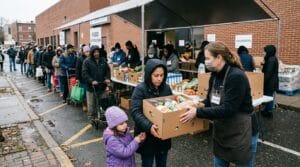
Public health often becomes visible only when something goes wrong. A disease starts spreading. Emergency rooms get crowded. Parents scramble for answers. Local officials ask people to stay calm while quietly trying to do more with less. In moments like that, budget cuts stop sounding abstract. They become personal.
That is exactly why public health funding matters so much in 2026. When lawmakers cut prevention systems, staffing, immunization programs, disease tracking, and local response capacity, the damage rarely shows up all at once. It appears in slower investigations, delayed communication, fewer nurses, weaker outreach, and less room for error when outbreaks happen. By the time the public notices, the system is already under strain.
This matters even more in a year when the United States is still dealing with measles outbreaks and broader uncertainty around health-agency funding. Public health is not a luxury line item. It is the part of the system that helps communities prevent crises, detect threats early, and respond before small problems become larger ones.
If CutsHurt.org is about exposing the real human cost of disinvestment, this is one of the clearest examples. Public health cuts do not just reduce spreadsheets. They reduce readiness.
Why this topic matters right now

Public health funding is always easier to cut politically than emergency rescue spending because prevention is less dramatic. A vaccination clinic, a disease investigator, a lab network, or a community health educator does not usually make headlines on a normal day. But those are exactly the systems communities depend on when an outbreak starts moving.
That is why the current moment matters. The country is still seeing measles outbreaks in 2026, and health-policy debates continue around the size and direction of federal health-agency budgets. When those two realities overlap, the consequences are not theoretical. They affect how fast problems are identified, how clearly the public is informed, and how well local systems can protect families.
Outbreaks expose what was already fragile
Strong public health systems do not get built in a panic. They are built through steady funding, trained workers, reliable laboratories, trusted communication, and enough staffing to respond without falling apart. Outbreaks reveal whether those systems were protected or neglected.
Cuts do not stay inside agency walls
When budgets shrink, the effects move outward. Local departments may lose staff. Community outreach may slow down. Data systems may remain outdated. Vaccine access can become harder to maintain. The ripple effect reaches schools, clinics, hospitals, employers, and families.
That is why “cost savings” can become community costs
A budget cut may look efficient at first glance. But if it weakens prevention, response, and local coordination, communities often pay the difference later through avoidable illness, disrupted care, overcrowded hospitals, missed work, and preventable fear.
What public health funding actually pays for
Many people hear “public health funding” and picture a vague bureaucracy. That misunderstanding makes cuts easier to sell. In reality, public health funding supports the basic systems that help communities stay ahead of disease and health threats.
Disease surveillance and early detection
This includes the people and systems that identify outbreaks, track patterns, and notice when something unusual is happening. Early detection is one of the biggest reasons a local problem does not always become a statewide emergency.
Immunization infrastructure
Vaccines do not deliver themselves. Public health agencies help manage access, reminders, community education, school coordination, and outreach to families who may face barriers to care. When that infrastructure weakens, vaccination gaps can widen quietly.
Emergency preparedness and response
Preparedness is not just about large disasters. It includes planning, communication, staffing, supply coordination, and the ability to respond quickly when a disease outbreak, weather event, or environmental health threat hits a community.
Public trust is part of the infrastructure too
When agencies are understaffed or forced to change programs abruptly, the public receives mixed signals more easily. That can damage trust. And once trust drops, even good health guidance becomes harder to deliver effectively.
Why cuts make outbreaks harder to control
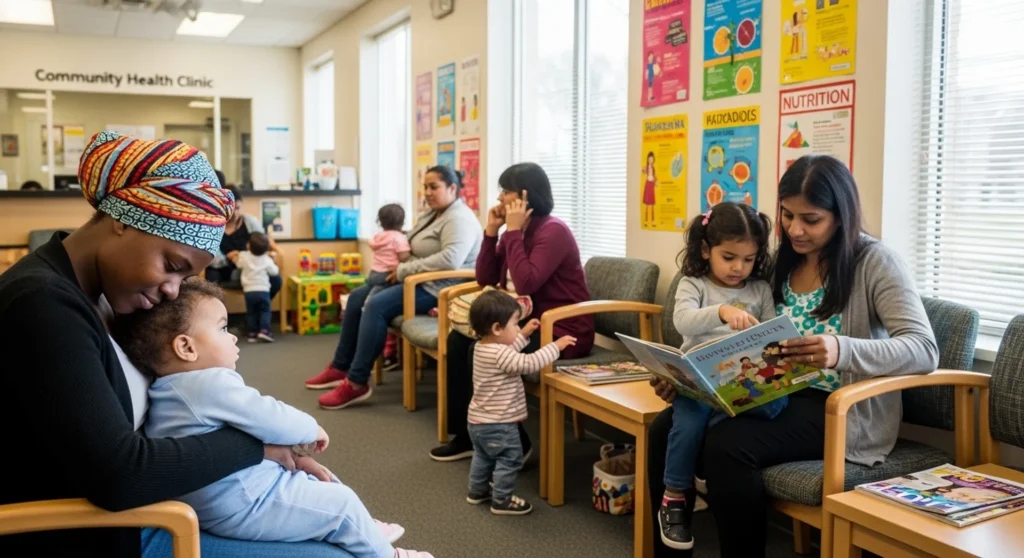
Outbreak response depends on speed and coordination. Health officials need to identify cases, trace contacts, communicate clearly, support clinicians, and help the public understand what to do. That process becomes harder when budgets and staffing are unstable.
Fewer workers means slower response
When departments lose epidemiologists, nurses, investigators, lab support, or outreach staff, the same amount of work does not disappear. It gets delayed, compressed, or left undone. During an outbreak, those delays matter.
Community outreach gets weaker
Public health is not only about collecting data. It is also about reaching real people in real neighborhoods. If outreach teams shrink, it becomes harder to answer questions, address misinformation, and help high-risk communities get timely support.
Local systems lose flexibility
A strong system can absorb stress. A weakened one breaks faster. When budgets are already tight, even a moderate surge in cases can overwhelm staff who are also covering other public-health duties.
That pressure does not stay local for long
Once local response slows down, hospitals, schools, and clinics often end up carrying more of the burden. A public-health problem quickly turns into a broader community problem.
Measles is a warning sign, not just a headline
Measles is one of the clearest reminders that prevention systems still matter. It spreads easily, can cause severe complications, and tends to exploit gaps in vaccination coverage and local response capacity. When outbreaks happen, they show how much public health work must happen behind the scenes to contain them.
Prevention is cheaper than cleanup
It is always easier to maintain strong vaccination systems and public communication than to manage an outbreak after it starts. Once cases rise, the work becomes more expensive, more labor-intensive, and more disruptive.
Children and vulnerable communities carry the highest risk
Families with limited healthcare access, transportation barriers, unstable insurance coverage, or lower trust in institutions often face the biggest challenges during outbreaks. Budget cuts do not create those vulnerabilities alone, but they can make them worse.
Outbreaks expose inequality
Communities with fewer providers, fewer clinics, and less public-health infrastructure are usually less able to absorb shocks. That is why outbreaks and budget cuts often hit hardest in the same places.
The damage is not just medical
Parents miss work. Children miss school. Clinics get stretched. Hospitals take on more preventable burden. The social cost grows well beyond the original case count.
Why local health departments are the part people underestimate
National headlines often focus on Congress, federal agencies, or statewide politics. But local health departments are where much of the real work happens. They are often the first to notice patterns, the first to answer worried residents, and the first to coordinate with schools, clinics, and hospitals.
Local departments are the operational backbone
Federal policy can shape funding, but local teams do the daily work of protecting communities. If those departments are unstable, the whole system becomes more fragile even when national agencies still exist on paper.
Short-term funding is not real stability
One-time grants and temporary extensions can help for a while, but they do not replace dependable long-term investment. Public-health departments cannot plan well when staffing and programs keep living from extension to extension.
Communities need systems, not improvisation
Emergency improvisation is not the same thing as preparedness. A system that survives only by scrambling is not a resilient system. It is a warning sign.
That is where the human cost becomes visible
When local departments lose capacity, communities lose prevention first, then speed, then confidence. Eventually they lose access. By then, the damage is much harder to reverse.
How this topic fits CutsHurt.org
This post fits your site well because it strengthens your existing content cluster instead of repeating it. It naturally connects with How Budget Cuts Jeopardize Public Health and Safety, Healthcare Budget Cuts 2026: Why Medicaid Cuts Are Triggering Hospital Layoffs (And What We Can Do), Community Health Center Funding 2026: Why Short-Term Extensions Still Put Patients at Risk, Rural Healthcare Funding Cuts: How Hospital Closures Ripple Through Entire Communities, and Public Safety Compromised: The Realities of Reduced Emergency Services Funding.
It also works as a bridge topic. Readers who come in through outbreak-related search intent can move naturally into broader articles about healthcare access, community disinvestment, mental health cuts, and public safety consequences. That makes the site feel more cohesive and more useful.
Final thoughts
Public health funding is easy to take for granted because its best work often looks like nothing happening. No outbreak. No panic. No hospital surge. No emergency headline. That quiet success is the product of planning, staffing, prevention, and trust.
When those systems are cut, communities become less protected long before they fully realize it. Outbreaks simply make the weakness easier to see. They show what happens when a country tries to save money by starving the very systems designed to keep people safe.
That is the real lesson for 2026. Public health is not extra. It is infrastructure. And when infrastructure is weakened, cuts hurt exactly where communities can least afford it.
For added authority, you can include external links to the CDC measles outbreaks page, the Brookings analysis of the 2026 health budget, and the George Washington University analysis on proposed CDC cuts.