
Childhood lead screening funding in 2026 deserves public attention because lead exposure often harms children without producing obvious early symptoms. A child may appear healthy while living in a home with deteriorating lead-based paint, contaminated dust, or another source of exposure. Without screening and follow-up, families may not recognize the problem until important opportunities for prevention have been missed.
In August 2026, the Centers for Disease Control and Prevention updated its information about federal childhood lead poisoning prevention funding. The agency identified a cooperative agreement period running from September 30, 2021, through September 29, 2026. Meanwhile, its fiscal year 2027 congressional budget justification requested $51 million for the Childhood Lead Poisoning Prevention Program, matching the enacted FY2026 funding level.
These facts do not establish that the national program has been eliminated or that a new cut has already occurred. Instead, they raise important questions about program continuity, how funding is distributed, and whether communities can maintain strong screening and follow-up systems.
For CutsHurt.org, the issue illustrates why public health budgets deserve careful scrutiny. Prevention services are easiest to overlook when they are working. Their value becomes more visible when children miss testing, families struggle to identify hazards, or local agencies cannot provide timely assistance.
Why Childhood Lead Screening Programs Need Reliable Public Funding
Lead is a toxic metal that can harm children’s developing bodies and brains. Exposure may affect learning, behavior, hearing, and other aspects of health. Young children face particular risks because they frequently place their hands or objects in their mouths and are still developing.
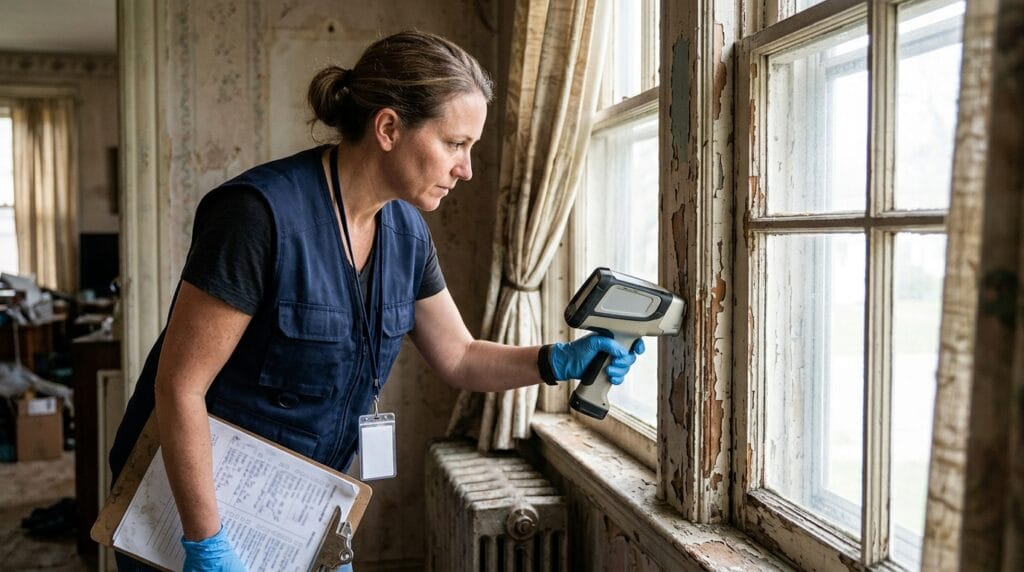
Lead hazards can exist in older housing, contaminated soil, water service lines, and certain products. Buildings constructed before 1978 may contain lead-based paint, although actual exposure depends on the condition of the paint and other circumstances.
The CDC emphasizes that most children with lead in their blood do not have obvious immediate symptoms. Consequently, waiting until a child appears sick is not a reliable prevention strategy.
Why testing is essential when children show no symptoms
A blood lead test provides information about lead exposure that cannot be obtained through appearance alone. Healthcare providers may collect blood using a finger or heel sample or a venous blood draw.
If an initial capillary test indicates an elevated level, a confirmatory venous test may be needed. The appropriate timing depends on the result and current clinical guidance.
The CDC uses a blood lead reference value of 3.5 micrograms per deciliter to identify children whose levels are higher than those of most children in the United States.
This reference value is not a safe exposure threshold. Public health officials recognize that no level of lead exposure in children is considered safe.
Early testing helps families and clinicians identify exposure, investigate possible sources, and arrange appropriate follow-up.
What Medicaid requires for childhood blood lead screening
Federal Medicaid policy requires blood lead screening tests for enrolled children at approximately 12 and 24 months of age. Children from 24 through 72 months who have no record of previous testing must also receive a blood lead test.
A risk assessment questionnaire alone does not satisfy this Medicaid testing requirement.
For children outside Medicaid, testing recommendations can depend on exposure risk, local conditions, and applicable state policies.
Parents can ask their child’s healthcare provider or local health department whether testing is recommended and where it is available.
Our article on school Medicaid cuts and student health in 2026 explains how public insurance also supports important services throughout childhood.
Why a blood test is only the beginning of prevention
Finding an elevated blood lead level is important, but testing alone cannot remove a hazard from a child’s environment.
Depending on the result, follow-up may include repeat testing, clinical evaluation, nutritional counseling, developmental monitoring, and assistance identifying possible exposure sources.
Environmental investigations can help determine whether lead hazards are present in paint, dust, soil, or other materials.
Families may also need information about safe remediation and available housing or environmental health programs.
Because these services often involve different agencies, coordination matters. A clinic may identify the concern, but a local health department or another qualified professional may help address the surrounding environment.
Reliable public funding supports the systems that connect those services.
What the CDC’s 2026 funding information actually shows
The CDC supports childhood lead poisoning prevention through cooperative agreements with state and local health departments and other eligible recipients.
These programs strengthen testing, reporting, surveillance, referrals, and targeted prevention activities.
The CDC’s August 2026 funding page lists a cooperative agreement period that concluded September 29, 2026. That end date identifies the conclusion of a particular funding period; it does not, by itself, mean that all childhood lead prevention work has stopped.
The agency’s fiscal year 2027 congressional justification separately requests $51 million for childhood lead poisoning prevention, the same level as FY2026 enacted funding.
However, a budget request is not a final appropriation. Funding decisions, future awards, and implementation details must be verified through official updates.
Why flat funding can still create operating pressure
When a program receives the same nominal dollar amount across multiple years, rising personnel, laboratory, transportation, and operating costs may reduce what the money can purchase.
That does not automatically mean every participating department must reduce services. Local costs, other funding sources, staffing arrangements, and program efficiencies can affect the outcome.
Nevertheless, health departments need predictable resources to retain qualified personnel, maintain testing partnerships, and conduct follow-up activities.
Short-term uncertainty may also complicate hiring or planning. Program managers need to know whether they can sustain existing services before making commitments to families and partner organizations.
Our 2026 state budget squeeze guide examines how federal and state financial decisions can create difficult tradeoffs for local services.
How Communities Can Protect Lead Screening and Prevention Services

Strong prevention systems combine healthcare access, environmental safety, accurate data, and coordinated follow-up.
When discussing childhood lead screening funding, communities should look beyond the amount listed in a budget proposal. They should also ask whether children receive recommended tests and whether families can obtain meaningful assistance after an elevated result.
For example, a jurisdiction may report that laboratory testing remains available while families still experience difficulty scheduling appointments or receiving environmental evaluations.
Tracking actual service delivery helps identify these gaps more clearly than relying on funding announcements alone.
What families, clinics, and local health departments can do
Parents can begin by checking whether their children have received recommended blood lead screening. Healthcare providers can review testing records during routine pediatric appointments.
Families living in older homes should seek reliable guidance about potential lead hazards. Disturbing deteriorating lead paint without suitable precautions can increase exposure, so repairs should follow applicable lead-safe practices.
Health departments can improve prevention by maintaining accessible information about testing locations, eligibility, follow-up procedures, and environmental resources.
Clinics may benefit from reminder systems that identify children due for testing and help families schedule appointments.
These strategies require coordination, but they can make prevention more practical for households already managing work, childcare, and transportation difficulties.
Questions local leaders should ask about prevention funding
Local officials should examine whether screening rates are improving, whether follow-up testing occurs on time, and how quickly elevated results lead to appropriate assistance.
They should also ask which communities face the highest exposure risks and whether current resources are reaching those families.
Useful indicators include the number of children tested, delays in confirmatory testing, environmental investigation capacity, and completion of recommended follow-up.
Data should be interpreted carefully. An increase in detected cases may reflect better screening rather than a sudden increase in exposure.
Similarly, fewer reported elevated results do not necessarily mean a community has become safer if fewer children are being tested.
For a broader perspective on prevention infrastructure, see our article about healthcare budget cuts and the pressures facing community providers.
Families should not have to navigate disconnected systems after receiving concerning blood test results. Clear instructions, accessible appointments, and coordination between healthcare and environmental health programs are important.
Local leaders can also review whether housing agencies and health departments communicate effectively when environmental hazards are identified.
Some families may need help finding qualified contractors, understanding safe renovation practices, or accessing local assistance for hazard reduction.
These needs demonstrate why preventing lead exposure involves more than a single pediatric appointment.
The CDC’s childhood lead prevention program also supports surveillance. Public health data helps identify neighborhoods where exposure risks may be concentrated and where targeted prevention could be especially useful.
Without reliable data, problems may remain hidden. Communities may struggle to determine whether screening gaps reflect access barriers, changes in population, or differences in local reporting.
CDC’s fiscal year 2027
The CDC’s fiscal year 2027 budget justification describes a program supporting state and local activities, technical assistance, training, and coordination.
For current clinical screening guidance, visit the CDC’s official page on testing children for lead poisoning.
It explains which children may be at increased risk, why blood testing matters, and how healthcare professionals interpret results.
Community organizations can help by sharing accurate information in appropriate languages and connecting families with legitimate public health services.
Schools, childcare centers, pediatric clinics, and community groups may also help parents understand the importance of screening without creating unnecessary fear.
Public discussions should distinguish established funding facts from projections or concerns. The conclusion of a grant period does not prove that services have ended, just as a proposed budget does not guarantee future funding.
Accurate reporting makes it easier for communities to identify real gaps and request clear explanations from responsible agencies.
Childhood lead screening funding in 2026 is ultimately about protecting children’s development before preventable exposure causes lasting consequences.
Stable funding, accessible testing, appropriate follow-up, and environmental prevention each contribute to a stronger response.
For CutsHurt.org readers, the central lesson is that effective public health programs should be evaluated by the protection they provide to families, not merely by the size of an annual budget line.
Communities benefit when prevention services remain reliable, understandable, and available to children who need them most.
Disclaimer: This article provides general public health education and policy analysis. It does not replace medical advice. Families concerned about lead exposure should contact a qualified healthcare professional or local health department.