
Medicaid work requirements 2027 are becoming one of the most important public health issues to watch because they show how a policy can cut healthcare access without looking like a direct budget cut. On paper, a work requirement may sound like a rule about employment, volunteering, education, or community engagement. In real life, it can become a paperwork test that many eligible people fail for reasons that have little to do with whether they work.
This distinction matters. Many people enrolled in Medicaid already work, care for family members, manage disabilities, go to school, search for jobs, recover from illness, or move in and out of unstable hourly work. A rule that requires reporting, verification, documentation, exemptions, and deadlines can still take coverage away from people who meet the requirement but cannot prove it quickly enough.
That is why communities should treat Medicaid work requirements 2027 as a healthcare access issue, not just an eligibility issue. When people lose coverage, they do not stop needing medication, mental health care, diabetes supplies, prenatal visits, physical therapy, or emergency treatment. They simply become less able to pay for it and less likely to receive care early.
Budget cuts do not always arrive as one dramatic line item. Sometimes they arrive as administrative burden. A form gets longer. A reporting deadline gets stricter. A verification system fails. A person misses a notice because they moved, changed jobs, lost internet access, or could not reach a caseworker. Then coverage disappears, and the human cost begins.
Why Medicaid Work Requirements 2027 Could Function Like Health Cuts
The phrase “work requirement” can make the policy sound simple. Work, report the hours, keep coverage. But Medicaid serves people with complicated lives. Many enrollees work part-time, hold seasonal jobs, change shifts, care for children, manage chronic illness, rely on unstable transportation, or live in areas where jobs and healthcare are both hard to access.
When a state adds new reporting systems, people must understand the rule, receive the notice, gather documents, complete forms, submit them correctly, and fix mistakes before a deadline. Every step creates a place where coverage can break.
Paperwork can remove eligible people from coverage

The most dangerous part of a paperwork-based cut is that it can look neutral. A state may say it removed people for noncompliance. But “noncompliance” can mean many things. It can mean the person did not receive the mail. It can mean they worked enough hours but could not get proof from an employer. Can mean they qualified for an exemption but did not understand how to claim it.
For families living paycheck to paycheck, even a short coverage gap can create damage. A missed prescription refill can lead to a health setback. A delayed appointment can turn a manageable condition into an emergency. A person who loses coverage may avoid care until symptoms become severe.
Administrative burden is not the same as accountability
Supporters of work requirements often frame them as accountability. But accountability should not depend on whether someone can navigate a confusing system while sick, underpaid, caregiving, or between jobs. If the rule removes eligible people because of paperwork failure, the policy does not protect Medicaid. It weakens access to care.
This is especially important for people with unstable work schedules. A worker may meet the requirement one month, lose hours the next, pick up shifts later, and still struggle to report everything accurately. The healthcare system should not punish people because low-wage work is inconsistent.
Coverage loss creates costs somewhere else
When people lose Medicaid, the costs do not disappear. Hospitals, clinics, food banks, families, local governments, and charities often absorb the pressure. Patients delay care until they need emergency treatment. Safety-net clinics see more uninsured patients. Hospitals face more uncompensated care. Local communities carry the cost that federal or state budgets claim to save.
This connects directly with your article on state budget squeeze in 2026. Federal policy changes can quickly become local tradeoffs in clinics, schools, food programs, and county budgets.
Work requirements can hit vulnerable groups indirectly
Many policies include exemptions for people who are pregnant, medically frail, disabled, caregiving, or otherwise unable to meet standard work rules. The problem is that an exemption only helps if the person can claim it, prove it, and keep it updated. People with the greatest needs often face the hardest time navigating paperwork.
A person with a serious mental health condition may miss notices. A person with unstable housing may not receive mail. Person with limited English proficiency may misunderstand forms. A person without reliable transportation may struggle to attend appointments needed for documentation. A caregiver may qualify for protection but still lose coverage if the system does not process the exemption correctly.
Exemptions fail when systems are hard to use
An exemption on paper is not the same as protection in practice. If the process requires repeated documentation, long call center waits, online portals, employer records, or confusing forms, eligible people can still fall through the cracks. That makes implementation just as important as the rule itself.
This issue connects with your post on mental health funding cuts 2026. People with behavioral health needs often need stable coverage most, yet they may struggle most with complex reporting systems.
How Communities Should Respond Before Coverage Loss Spreads
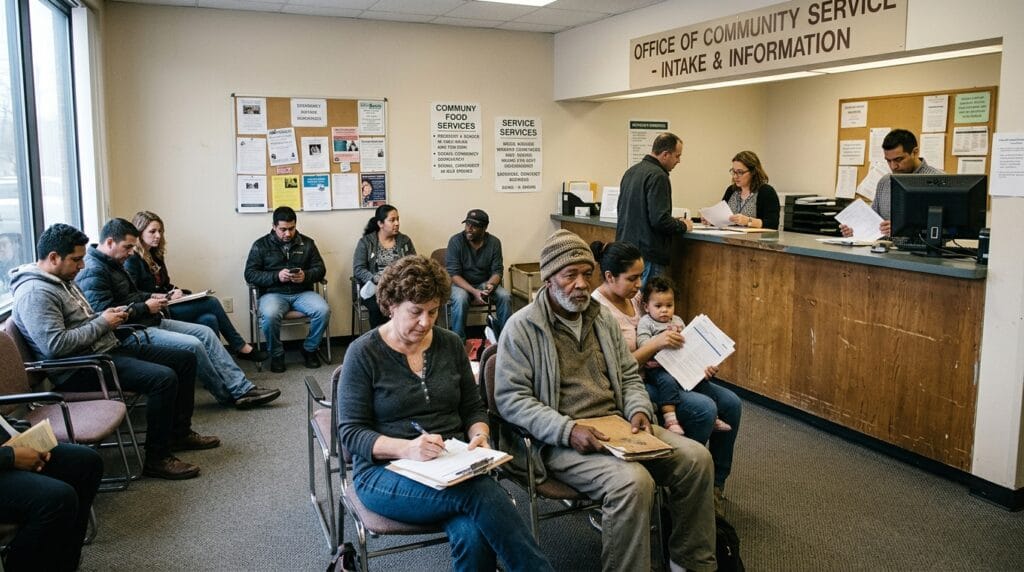
Communities should not wait until coverage losses appear in official reports. By then, families may already have skipped medication, missed therapy, delayed prenatal care, lost access to treatment, or shown up uninsured at emergency rooms. The better approach is to prepare now.
Advocates, clinics, schools, local officials, legal aid groups, faith organizations, and public health workers should ask practical questions before implementation begins. Who must report? Who qualifies for exemptions? How will people receive notices? How will the state verify work hours? What happens when a person cannot get employer documentation? How fast can someone regain coverage after losing it?
Local leaders should track coverage warning signs
The early warning signs may appear in many places. Community clinics may see more uninsured patients. Pharmacies may notice more abandoned prescriptions. Schools may hear from parents who lost coverage. Hospitals may report rising uncompensated care. Food banks may see more families choosing between groceries and medication.
Tracking these signs matters because paperwork harm can stay invisible if no one connects the dots. A coverage loss may look like one person’s missed deadline. Across a community, it can become a public health problem.
Make the human impact visible before it becomes normal
Numbers matter, but stories matter too. Communities should document both. How many people lost coverage? How many reapplied? Long did the gaps last? Which groups were most affected? What services did people delay? What did clinics, hospitals, schools, and families absorb because coverage disappeared?
Your article on healthcare budget cuts 2026 is a strong internal link here because it explains how Medicaid pressure can turn into hospital layoffs, reduced services, and longer waits for care.
Your guide on community health center funding 2026 also fits this topic. Community clinics often become the first place people turn when coverage becomes unstable.
For external authority, readers can review the official CMS fact sheet on the Medicaid community engagement requirement. It explains the federal framework, qualifying activities, and the 80-hour monthly requirement for certain Medicaid applicants and enrollees.
The policy debate around Medicaid work requirements 2027 should not ignore what happens after coverage loss. If someone loses Medicaid because of paperwork, the clinic still sees the health problem. The hospital still treats the emergency. The family still faces the bill. The community still carries the consequences.
That is why this topic belongs at the center of the budget-cut conversation. A cut does not need to close a hospital to hurt people. It can close the door to coverage one form at a time. It can make healthcare depend on whether a person receives mail, understands a portal, gets proof from an employer, or reaches a caseworker before the deadline.
Medicaid should protect health, not test people’s ability to survive bureaucracy. Communities need transparent implementation, simple exemption processes, strong outreach, multilingual support, easy re-enrollment, and public reporting on who loses coverage and why. Without those safeguards, a work requirement can become a health cut by another name.
The bottom line is clear: Medicaid work requirements 2027 may sound like an employment policy, but the real test will be healthcare access. If eligible people lose coverage because the paperwork system fails them, communities will pay the price in delayed care, worse health outcomes, and deeper safety-net strain. Cuts hurt most when they hide behind process. That is why this issue needs attention before the damage becomes routine.