
The Rural Health Transformation Fund in 2026 is being discussed as a solution for rural communities facing healthcare budget pressure. On paper, a dedicated rural health fund sounds reassuring. It suggests that policymakers understand rural hospitals, clinics, and patients need support. But the harder question is whether one-time or limited grant funding can truly replace deeper Medicaid cuts that affect everyday care, hospital revenue, staffing, emergency access, and long-term stability.
For many rural communities, healthcare access is already fragile. A small hospital may be the only emergency room for miles. A clinic may be the only place where families can get routine care without driving hours. A local hospital may also be one of the largest employers in the county. When Medicaid funding drops, the damage does not stay inside a spreadsheet. It can show up as reduced services, longer waits, fewer staff, delayed care, closed maternity units, and communities wondering whether their hospital will still be there next year.
This topic fits naturally with CutsHurt.org because it shows how budget choices get repackaged. A new fund may sound like protection, but if the larger cut is bigger than the replacement, communities still lose ground. Readers can connect this article with Rural Healthcare Funding Cuts, Community Health Center Funding 2026, and State Budget Squeeze in 2026.
Why the Rural Health Transformation Fund Is Not a Full Replacement
The first problem is scale. A rural health fund may provide important money, but it does not automatically match the size, timing, or structure of the Medicaid reductions rural providers face. Medicaid is not a side program for rural healthcare. It is part of the financial foundation that helps hospitals and clinics keep doors open, especially in communities with older populations, lower incomes, fewer privately insured patients, and higher rates of chronic illness.
A grant fund can help with projects, innovation, care models, technology, workforce support, or targeted stabilization. But Medicaid pays for care every day. It supports patient coverage, provider reimbursement, hospital revenue, and clinic operations. When ongoing coverage dollars are reduced, limited grants may not be enough to protect emergency rooms, maternity units, nursing home connections, behavioral health access, or primary care capacity.
Rural hospitals need stable revenue, not only temporary relief
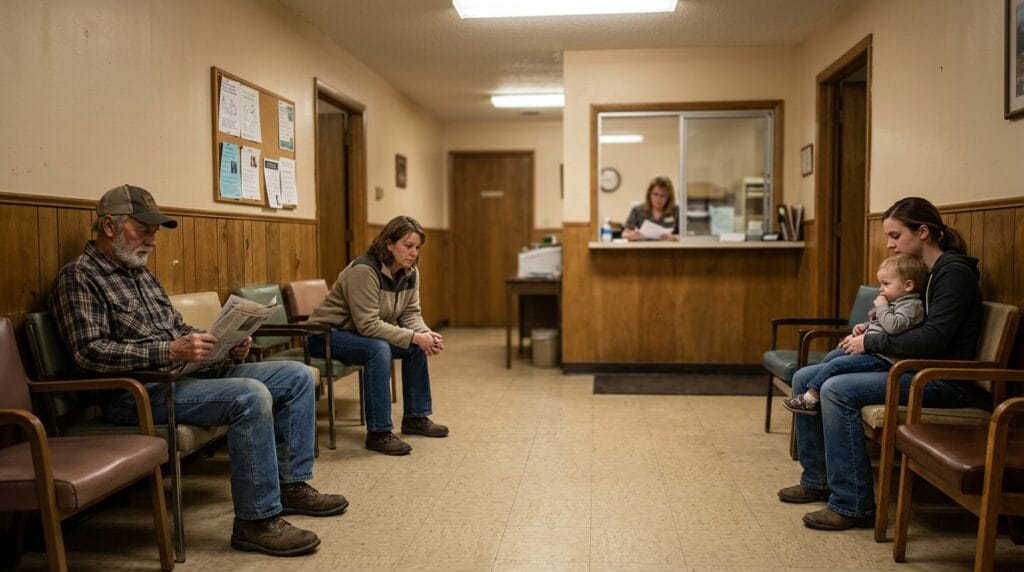
Hospitals cannot run emergency departments, maintain staff, buy supplies, and plan services on uncertainty. They need predictable revenue. A transformation fund may help a hospital apply for money, launch a program, or modernize part of its care model. But it may not solve the core problem if patient coverage drops and reimbursement shrinks.
This is especially important for hospitals already operating on thin margins. Rural facilities often have fixed costs that do not disappear just because patient volume is lower. A hospital still needs nurses, lab capacity, emergency coverage, equipment, compliance systems, billing staff, maintenance, and transportation coordination. If revenue falls, leaders may begin cutting services long before the public hears the word “closure.”
Grant funding does not work like Medicaid coverage
Medicaid coverage follows patients. When eligible people can use coverage, hospitals and clinics receive payment for care. Grant funding works differently. It is often time-limited, application-based, project-specific, and shaped by program rules. That does not make it useless, but it makes it different.
A community cannot assume a grant will cover every lost dollar, every patient visit, every staffing need, or every service line. If the grant supports transformation but the hospital is losing operating revenue, the facility may still reduce hours, delay hiring, stop certain services, or shift more care to distant regional systems.
Innovation cannot replace basic access
Transformation language can be helpful when it leads to better care. Rural communities do need telehealth, workforce pipelines, mobile clinics, regional partnerships, better data systems, and smarter care coordination. But innovation should not become a polite way to excuse basic access loss.
A telehealth program does not replace an emergency room for a stroke, heart attack, traumatic injury, complicated pregnancy, or severe infection. A mobile clinic does not replace a full hospital. A regional partnership does not help much if the nearest facility is too far away for urgent care. Transformation should strengthen rural care, not become a substitute for keeping essential services alive.
Medicaid cuts ripple beyond hospital budgets
When Medicaid support weakens, the impact spreads beyond hospitals. Community clinics may see more uninsured or underinsured patients. Families may delay care. Emergency departments may see sicker patients later. Local employers may struggle to recruit workers to a town with shrinking healthcare access. Ambulance systems may drive farther. Schools, food banks, mental health providers, and county agencies may absorb more stress.
This is why rural healthcare funding cannot be judged only by whether a fund exists. The question is whether total support is enough to preserve care in real communities. If a hospital loses operating stability but receives a grant for a limited program, policymakers may claim support while patients still experience loss.
Hospital cuts become community cuts
A rural hospital is often more than a place for medical care. It is an economic anchor, a source of stable jobs, a training site, a partner for public health, and a signal that the community is still livable. When services shrink, families notice. Businesses notice. Older adults notice. Young parents notice.
Hospital layoffs reduce local spending. Service closures increase travel costs. Longer emergency routes increase risk. Loss of maternity care can force pregnant patients to drive far from home. Reduced behavioral health capacity can push more people into crisis. These consequences connect directly with your site’s articles on Mental Health Funding Cuts 2026 and ACA Subsidy Expiration in 2026.
How Communities Should Judge Rural Health Funding Claims
Communities should not reject rural health funding. They should demand honesty about what it can and cannot do. A fund may help, but leaders should explain whether it fills the actual gap created by Medicaid reductions. If the answer is no, the public deserves to know which services remain at risk and what backup plan exists.
A strong rural health policy should protect core care first: emergency services, primary care, maternal health, behavioral health, chronic disease management, transportation-sensitive services, and community health centers. Transformation should build on that foundation. It should not be used to distract from cuts that weaken the foundation itself.
Questions local leaders, journalists, and advocates should ask
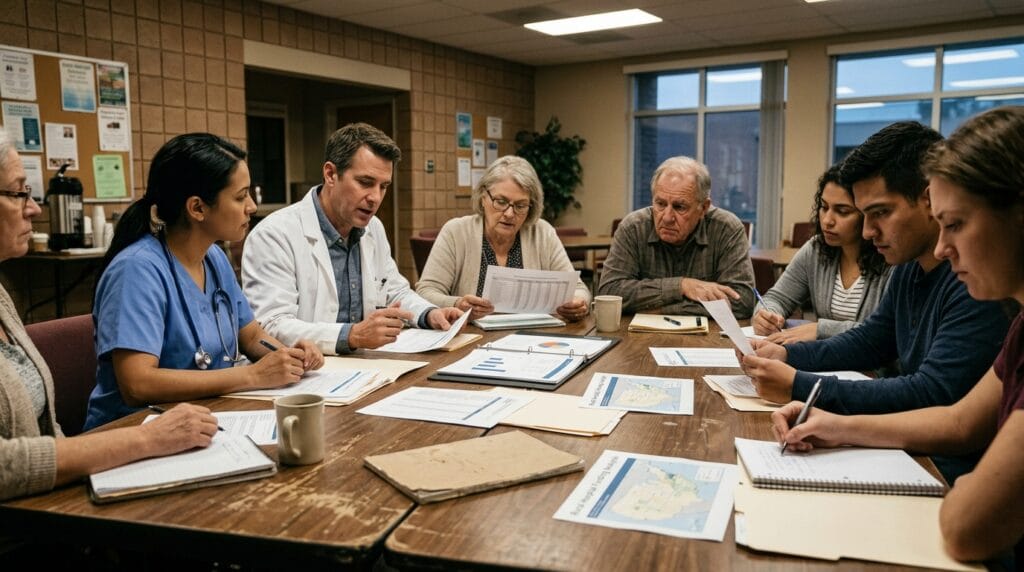
Local leaders should ask specific questions. How much Medicaid revenue will local hospitals and clinics lose? How much rural health fund money is actually available to this state or region? Is the money guaranteed or competitive? Is it one-time or recurring? Can it be used for operating costs, staffing, emergency departments, maternity care, and clinic access? Which services are most vulnerable if funding falls short?
Journalists should ask hospitals and state officials what changes patients may notice first. Will appointment wait times grow? Will rural clinics reduce hours? Will specialist visits disappear? Will ambulance diversion increase? Will OB services, mental health programs, or nursing home connections be affected?
Advocates should also track the human evidence. Budget debates often become abstract, but patients live the details. A longer drive for dialysis, a closed clinic day, a delayed prenatal visit, a missed cancer screening, or an emergency transfer that takes too long can show the real meaning of a funding gap.
What a serious rural healthcare response should include
A serious response should include transparent numbers, multi-year stability, protection for essential services, support for community health centers, workforce investment, and clear accountability. If a state receives rural health funds, residents should be able to see where the money goes, what services it protects, and whether it actually reduces access gaps.
Communities should also connect rural health funding to broader safety-net pressure. Medicaid, ACA coverage, SNAP, housing support, school health services, and public health staffing all affect whether people seek care early or delay until crisis. Cuts in one area make every other system work harder. Your article on SNAP Cuts 2026 helps show how food insecurity and healthcare access can collide in the same household.
For a high-authority external source, readers can review KFF’s analysis of how federal Medicaid cuts in the enacted reconciliation package may affect rural areas: KFF on Medicaid cuts and rural areas.
The Rural Health Transformation Fund in 2026 should not be treated as a magic shield. If it helps communities modernize care, that is valuable. But if it is used to soften the language around larger Medicaid cuts, people should be skeptical. A smaller replacement cannot be sold as full protection.
The bottom line is direct: rural communities need stable healthcare access, not budget slogans. They need emergency care, clinics, maternity services, behavioral health support, and local providers who can stay open. If funding decisions remove more than they replace, the result is still a cut. And as CutsHurt.org keeps showing, cuts hurt most when leaders pretend the damage has already been solved.