State budget squeeze is one of the clearest ways federal cuts become local pain in 2026. A funding cut may begin in Washington, but the consequences rarely stay there. Once federal support shrinks, state leaders must decide what to protect, what to reduce, what to delay, and who will absorb the damage.
That pressure can affect Medicaid, SNAP, school meals, community clinics, housing support, behavioral health services, public health staffing, and local education programs at the same time. Families may not know which law or funding formula changed. They only know the clinic has fewer appointments, the school meal process has more paperwork, the benefit office takes longer to respond, or the local program that helped them last year is no longer available.
Budget language can hide the human cost. Lawmakers may call it savings, efficiency, restructuring, or fiscal discipline. Communities experience it differently. Parents lose support. Schools lose flexibility. Clinics serve more people with fewer resources. Food banks face longer lines.
A state budget squeeze does not only reduce services. It creates a chain reaction. When one support weakens, families lean harder on another. If several supports weaken at once, people fall through the gaps.
Why Federal Cuts Create Local Tradeoffs
Federal cuts create local tradeoffs because states do not have unlimited flexibility. Unlike the federal government, states generally must balance their budgets. When federal funding drops or program costs shift downward, state leaders must respond. They can raise revenue, reduce services, limit eligibility, cut provider payments, delay investments, or move money away from other programs.
None of those choices is painless. If a state protects Medicaid, it may reduce money available for schools, public health, housing, or local services. Protecting schools can also leave healthcare access, food assistance administration, or clinic support exposed. Avoiding tax increases may pass the pressure to counties, districts, hospitals, nonprofits, and families.
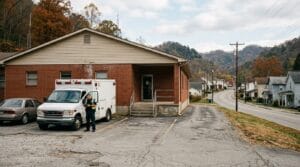
This is why state budget squeeze deserves attention from anyone who cares about public health. The harm does not always appear as one dramatic closure. It may show up as smaller changes that add up: fewer outreach workers, longer renewal processing times, reduced clinic hours, narrower school supports, fewer nutrition access points, and more paperwork for families already under stress.
This connects directly with School Medicaid Cuts in 2026. Schools often depend on Medicaid reimbursement for health-related student services. When Medicaid funding becomes unstable, the pressure can reach classrooms, nurses, therapists, special education services, and district budgets.
Medicaid and SNAP cuts do not stay in one agency

Medicaid and SNAP are often discussed as separate programs, but families experience them together. Medicaid helps people access healthcare. SNAP helps people buy food. Both affect health, stability, school readiness, work capacity, and household survival. When these supports weaken, the same families may face higher medical stress and higher food insecurity at the same time.
A parent who loses food assistance may struggle to buy healthy meals. A child who loses school-based health support may miss therapy, screenings, or care coordination. An adult who loses Medicaid access may delay treatment until symptoms worsen. These problems do not stay inside one agency’s budget. They move into schools, workplaces, emergency rooms, charities, housing systems, and local governments.
That is why SNAP Cuts 2026 belongs in the same conversation as Medicaid and education funding. Food assistance is public health infrastructure. When it shrinks, hunger rises, stress rises, and communities pay the price somewhere else.
Cost shifts force impossible choices
A cost shift is not the same as real savings. It simply moves the bill. If the federal government reduces support, states may have to pay more to maintain services. When states cannot or will not pay more, counties, schools, clinics, food banks, and families absorb the difference.
Those tradeoffs can become cruel fast. Should a state protect healthcare coverage or school funding? Should it maintain food assistance administration or reduce local program staff? Should it cut provider payments and risk fewer doctors accepting Medicaid? Should it increase taxes during an already difficult economic period?
These are not abstract questions. They determine whether a child gets therapy at school, whether a low-income adult can see a doctor, whether a senior can buy groceries, and whether a rural clinic can keep its doors open.
School meals can become collateral damage
School meals can become collateral damage when SNAP participation changes. Many schools use SNAP participation to help identify students who qualify for free or reduced-price meals. If fewer families receive SNAP because of stricter rules, paperwork barriers, or eligibility losses, schools may lose automatic eligibility data that helps connect children to meals.
Children do not suddenly need less food when paperwork changes. Instead, families may face more forms, more verification, more confusion, and more chances to fall through the cracks. A school meal program should reduce hunger. A budget squeeze can turn it into another administrative obstacle.
Hungry students bring the impact into classrooms. Hunger can affect concentration, behavior, attendance, mood, and learning. The cut may begin in a nutrition program, but the consequence can appear in reading scores, nurse visits, discipline patterns, and teacher workload.
Why schools, clinics, and food programs feel the pressure together
Schools, clinics, and food programs often serve the same communities. A family that relies on Medicaid may also rely on SNAP, school meals, housing assistance, or community health centers. When funding pressure hits multiple systems at once, families have fewer backup options.
Community clinics may see patients who delayed care because coverage became harder to keep. Schools may see students who are hungry, stressed, or missing health services. Food banks may see more families who lost benefits or could not complete paperwork on time. Housing agencies may see more families choosing between rent, groceries, and medication.
This is why Community Health Center Funding 2026 is such an important related issue. Community health centers often carry the weight when insurance coverage becomes unstable or unaffordable. If those clinics also face funding uncertainty, the safety net frays from both directions.
Housing also belongs in this discussion. When families face benefit cuts, higher healthcare costs, or food insecurity, rent pressure becomes more dangerous. Your article on Housing Assistance Cuts 2026 makes that connection clear: stable housing is part of public health.
Local agencies cannot absorb unlimited cuts
Local agencies are often praised for doing more with less, but that phrase has limits. A food bank cannot replace a federal nutrition program. A school nurse cannot replace a full healthcare system. A community clinic cannot absorb endless uninsured patients without resources. A county office cannot solve every state and federal funding gap with local goodwill.
When policymakers assume local organizations will “step up,” they often ignore capacity. Volunteers burn out. Donations fluctuate. Staff leave. Waiting lists grow. Families receive temporary help when they need stable support.
That is the hidden danger of state budget squeeze. It does not only cut programs. It transfers responsibility to the least-resourced parts of the system and then blames them when they cannot carry the load.
How Communities Can Respond Before Services Shrink
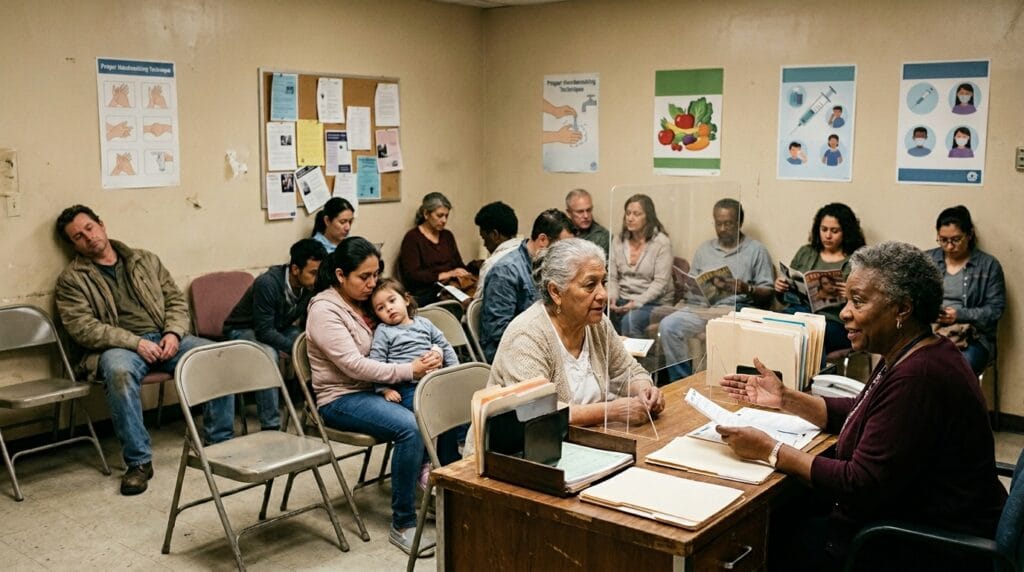
Communities should not wait until services disappear before documenting harm. By the time a clinic closes, a school program ends, or a food pantry line doubles, families have already been living with the damage. Early tracking can help advocates, journalists, local officials, and residents show what budget choices are doing before the consequences become irreversible.
The first step is to connect the dots. Medicaid cuts, SNAP cuts, school meal changes, housing reductions, and public health staffing losses may appear in different agencies, but they often affect the same households. A strong community response looks at the full picture instead of treating every program as a separate issue.
Residents can ask direct questions. Which programs will lose funding? Who uses them? What happens if the state does not replace lost federal dollars? Which counties, schools, clinics, or families will feel the first impact? How will leaders measure harm? What backup plan exists if local providers cannot absorb the pressure?
What advocates and leaders should track now
Advocates and local leaders should track warning signs before the budget damage becomes normal. Watch school meal participation, Medicaid renewal losses, SNAP enrollment changes, food pantry demand, clinic wait times, emergency room use, unpaid medical bills, school nurse workloads, behavioral health referrals, and housing instability.
Numbers matter, but stories matter too. A budget chart can show a funding gap. A family story can show what that gap does. A child losing meals, a senior choosing between groceries and medication, a clinic cutting hours, or a school losing reimbursement for health services can make the impact harder to dismiss.
Local governments should also look at secondary costs. A cut that saves money in one budget line may increase costs elsewhere. If food assistance shrinks, hunger-related health problems may rise. Reduced Medicaid access can push more people toward emergency care. Weaker school supports can leave districts with more unmet student needs.
Public budgets should show real-life consequences
Public budgets should not hide harm behind spreadsheets. Every proposed cut should include a human impact statement. Who loses help? How many people are affected? Which communities face the greatest burden? What services become harder to access? What costs may shift to counties, schools, clinics, families, or charities?
Lawmakers should also explain whether they are solving a problem or simply moving it. If a federal cut becomes a state cut, and a state cut becomes a local crisis, no one should call that efficiency. It is a transfer of pain.
The National Conference of State Legislatures explains that Medicaid and SNAP changes can affect state and local school budgets, including school meal eligibility and school-based Medicaid reimbursements. Readers can review that policy overview here: NCSL on SNAP, Medicaid, and state education budgets.
The state budget squeeze in 2026 shows how connected public systems really are. Healthcare, food, housing, and education are not separate from one another in people’s lives. Families do not experience a Medicaid cut, a SNAP cut, and a school budget cut as isolated policy events. They experience them as one tightening circle.
That circle can force impossible choices: pay rent or buy medication, complete another form or lose benefits, keep a child fed or cover a utility bill, wait for care or go to the emergency room. These are not signs of personal failure. They are signs of policy failure.
Cuts hurt because they make communities weaker before anyone admits the damage. They ask schools, clinics, charities, and families to carry costs that budgets pretend have disappeared. In 2026, communities need honest budgets, transparent tradeoffs, protected safety-net services, and leaders willing to measure harm before it becomes disaster.