
Medicaid home care is one of the least visible parts of the healthcare safety net, even though millions of Americans rely on it every year.
Home- and community-based services, often called HCBS, can help older adults and people with disabilities receive care in their homes or communities instead of moving into nursing facilities or other institutional settings.
These services can include personal care, home health support, respite care, case management, adult day services, habilitation, and help with everyday activities.
In 2026, HCBS deserves closer attention because states are preparing for major changes in federal Medicaid financing over the coming years. States will make different choices, and not every state will reduce home-care services. Still, home care is an area where states already have several tools for managing costs.
That means funding pressure can show up in ways that families may not immediately recognize: longer waiting lists, fewer approved hours, lower provider payments, tighter eligibility rules, or difficulty finding a worker who can actually provide the authorized care.
Why Medicaid Home Care Matters to Families and Communities
Medicaid is the country’s largest payer for long-term services and supports delivered in homes and community settings.
Unlike short-term medical treatment after an illness or injury, long-term services may help someone with basic activities every day. A person may need assistance getting dressed, preparing food, bathing, moving safely around the home, managing appointments, or participating in community life.
For many families, these services determine whether a loved one can remain at home.
What HCBS Provides and Who Relies on It
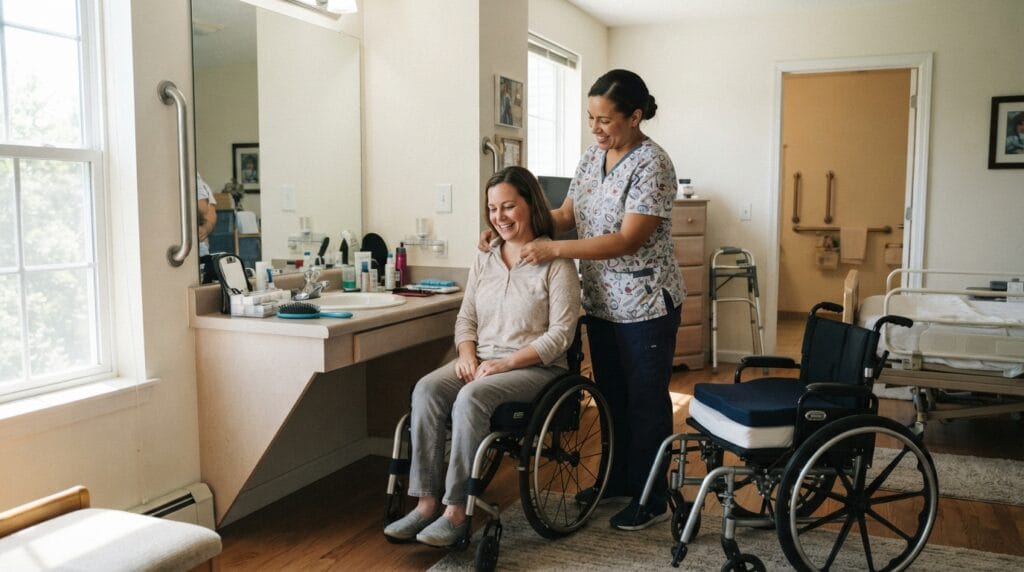
CMS explains that HCBS programs serve several populations, including older adults, people with physical disabilities, people with intellectual or developmental disabilities, and people with certain behavioral health needs.
States can provide these services through several Medicaid authorities. One of the best known is the Section 1915(c) waiver program, which allows states to design services for specific populations who would otherwise meet requirements for institutional levels of care.
States currently operate hundreds of HCBS waiver programs nationwide.
That flexibility helps states tailor programs to local needs. However, it also means access can differ significantly depending on where a person lives.
Medicaid Finances a Large Share of Home Care
KFF estimates that Medicaid pays for nearly 70% of all home-care spending in the United States.
That makes Medicaid financing especially important to people who need long-term support but cannot afford to purchase enough private care on their own.
Home care can also affect other parts of a household budget. When formal support is available, a spouse, parent, adult child, or other caregiver may be able to keep working or reduce the number of unpaid caregiving hours they provide.
When formal services become harder to access, those responsibilities do not disappear. Families often absorb more of the work themselves or seek alternatives that may be more expensive.
This connects with CutsHurt.org’s article on the state budget squeeze in 2026, which explains how federal funding changes can lead states to make different choices about healthcare and other public services.
Waiting Lists and Service Caps Can Limit Access Without Ending a Program
A state does not need to eliminate an HCBS program completely for access to become tighter.
Many waiver programs allow states to limit the number of participants they serve. States may also use spending caps, prior authorization, waiting lists, or limits on specific services to manage costs.
This creates an important distinction when discussing Medicaid reductions.
A program may remain technically available while fewer people can enter it. Someone who already receives services may face fewer hours, narrower benefits, or difficulty finding a provider.
KFF found that nearly one-third of responding states planned to adopt new strategies for controlling home-care costs in state fiscal year 2026. Much of that survey work occurred before later federal financing changes were fully implemented, so it does not establish what every state will ultimately do.
It does show that cost management was already part of the HCBS landscape.
Funding Pressure Can Shift More Care Onto Families
When Medicaid home care becomes harder to obtain, families frequently become the backup system.
An adult child may reduce work hours to help an aging parent. A parent of a child with significant disabilities may take on more personal care. A spouse may provide overnight support after paid caregiver hours are reduced.
Family caregiving can be meaningful, but it also has practical limits.
Caregivers may have jobs, health conditions, children, housing costs, and other responsibilities. More unpaid care can lead to lost income, stress, transportation problems, or difficulty maintaining the caregiver’s own health.
Payment Rates and Workforce Shortages Matter Too
Coverage on paper does not guarantee that a worker is available.
Home-care systems already face workforce challenges. Direct-care jobs can involve demanding physical and emotional work, while wages vary widely by state and program.
KFF reports that states have used higher Medicaid payment rates as an important strategy for addressing shortages of home-care workers.
If budget pressure leads a state to hold rates flat or reduce them, providers may find recruitment and retention more difficult. On the other hand, a state may choose to protect or increase rates while making savings elsewhere.
This is why the effect of Medicaid financing changes cannot be described with one national outcome.
States make different policy choices, and local labor markets differ. Families should watch what happens to actual provider availability, not only whether the benefit remains listed in Medicaid documents.
The same basic issue appears in rural healthcare. CutsHurt.org’s article on the Rural Health Transformation Fund in 2026 explains why targeted grants and ongoing Medicaid reimbursement play different roles in maintaining access to care.
What Families Should Watch in Medicaid Home Care During 2026
The most useful approach is to separate national funding changes from state-level implementation.
Federal Medicaid policy establishes broad financing and program rules, but state Medicaid agencies administer HCBS programs within those requirements. They make decisions about waiver design, provider payments, enrollment limits, covered services, and other operational details.
As a result, a national estimate of federal Medicaid reductions does not tell an individual family exactly what will happen to their services.
State Decisions Will Determine Much of the Real-World Impact
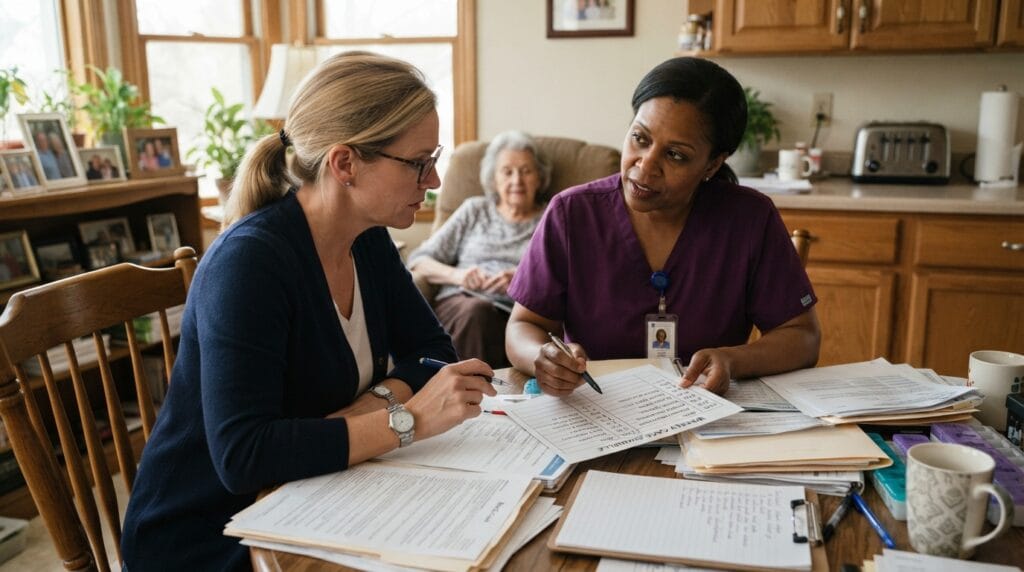
Families should watch state Medicaid notices, waiver amendments, legislative budget documents, provider communications, and official renewal information.
Changes may appear gradually.
A state could freeze new waiver enrollment. Another might adjust provider rates. A program could tighten authorization rules or change how many service hours it approves.
Some states may choose to protect HCBS because home care can help people remain outside institutional settings. Others may face budget pressures that lead them to consider restrictions.
KFF notes that HCBS is particularly exposed to state cost-management decisions because much of home care is provided through optional Medicaid services and waivers.
At the same time, CMS continues to oversee quality, health, welfare, and access requirements for Medicaid HCBS programs.
Track Service Hours, Waitlists, and Provider Availability
Families can pay attention to a few practical indicators even when state budget debates are difficult to follow.
Is the waiting list growing? Are authorized service hours changing? Are home-care agencies accepting new Medicaid clients? Are workers leaving because providers cannot recruit staff? Are respite services becoming harder to schedule?
Those changes may reveal access problems before a program formally announces a major reduction.
Families should also keep copies of notices from Medicaid agencies and managed-care plans. If approved services change, written documents can help explain what changed, when it changed, and what appeal or review options may be available.
Housing can interact with these issues as well. A person who depends on home-based care also needs a stable place where that care can be delivered. CutsHurt.org’s article on housing assistance and health in 2026 explores how housing instability can make treatment and recovery harder.
The official Medicaid program describes HCBS as services that allow beneficiaries to receive support in their own homes and communities rather than in institutional or isolated settings. Readers can review that framework on the Centers for Medicare & Medicaid Services HCBS resource.
The larger policy picture remains uncertain because state responses will vary over time.
KFF estimates that the 2025 federal reconciliation law will reduce federal Medicaid spending substantially over the coming decade. However, a federal funding reduction does not translate into one identical HCBS cut across all 50 states.
Medicaid home care
States can respond through different combinations of revenue changes, provider rates, benefits, eligibility policies, administrative controls, waiver enrollment, or other budget decisions.
That distinction matters for accurate public-health reporting.
Medicaid home care should not be discussed as though every beneficiary will lose the same service on the same date. The more realistic concern is that funding pressure can increase the number of difficult choices states make about programs that already use waiting lists, enrollment caps, and other cost controls.
For families, those choices can become very personal.
A budget adjustment may eventually determine whether a caregiver arrives five days a week instead of three, whether someone waits months longer for waiver enrollment, or whether a family member reduces paid work to fill a gap.
That is why HCBS belongs in the broader discussion about healthcare funding.
Home care may happen quietly inside bedrooms, kitchens, community centers, and family homes, but it is still part of the healthcare infrastructure millions of Americans depend on.
This article is for educational purposes. Medicaid eligibility, HCBS availability, waiver rules, provider networks, and appeal procedures vary by state and can change. Families should use their state Medicaid agency and CMS resources for current program information.