
Community health centers do not usually make national headlines until something goes wrong. A clinic reduces hours. A neighborhood loses a prenatal program. A behavioral health slot disappears. A patient gets told the next available appointment is weeks away. By that point, the damage has already started. That is exactly why community health center funding 2026 deserves more attention right now.
For many people, community health centers are not a backup option. They are the front door to the healthcare system. They provide primary care, preventive care, chronic disease management, women’s health services, pediatric visits, and behavioral health support in places where access is already fragile. When funding becomes uncertain, clinics do not need to shut down overnight for patients to feel the impact. Hiring slows, expansion plans stall, contracts get delayed, and core services come under pressure.
That is what makes this issue so dangerous. A short-term extension can sound like stability from the outside, but inside a clinic, it often feels like operating with the lights on and the floor shifting underneath. Administrators cannot plan confidently. Staff cannot assume positions will remain supported. Patients cannot count on the same level of local access next season that they had this season.
On a site like CutsHurt.org, this topic fits naturally because it connects policy decisions to their real-world consequences. It also builds cleanly on related coverage such as Healthcare Budget Cuts 2026: Why Medicaid Cuts Are Triggering Hospital Layoffs, Rural Healthcare Funding Cuts: How Hospital Closures Ripple Through Entire Communities, and The Ripple Effect: How Budget Cuts Undermine Community Health Services.
Why Community Health Center Funding 2026 Matters So Much
The phrase community health center funding 2026 may sound technical, but the reality is simple. These centers keep routine care local and affordable for people who might otherwise delay treatment until a problem becomes serious. They are often where a parent takes a child with a fever, where a patient with diabetes gets regular monitoring, where a pregnant woman starts prenatal care, or where someone struggling with anxiety or depression gets connected to help before a crisis escalates.
When funding is stable, a community health center can think beyond survival. It can recruit clinicians, improve scheduling, expand hours, invest in outreach, and respond to local needs. When funding is short-term or uncertain, leadership has to think differently. Instead of asking how to improve care, they start asking what can be postponed, which vacancies can remain unfilled, and which programs are most vulnerable if money tightens again.
That shift is easy to miss from the outside. The building may still be open. The phones may still be answered. But access can already be eroding in ways that patients notice quickly: fewer appointments, fewer specialty services, less continuity, and longer waits.
Short-Term Extensions Do Not Solve a Long-Term Access Problem
One of the biggest mistakes in public debate is treating a short-term funding extension as if it solves the underlying issue. It does not. It may delay the worst outcome, but it rarely gives clinics the certainty they need to plan responsibly. Healthcare infrastructure is not built quarter by quarter. It depends on staffing pipelines, contracts, equipment, compliance, and community trust.
That means uncertainty has costs even when the clinic technically remains open. A center may hesitate to hire for an open behavioral health role. It may hold off on expanding women’s health visits. It may delay replacing aging equipment. It may scale back outreach that helps patients stay connected to care. None of those choices look dramatic in a press release, but together they weaken the care network that communities rely on.
This is where budget language becomes misleading. Policymakers may say services are still funded, but patients experience the truth differently. In practice, uncertain funding can feel like a slow-motion cut.
Who Gets Hit First When Funding Gets Tight

Funding instability does not land equally. It falls hardest on the people who already have the least margin for disruption. Low-income families, uninsured patients, underinsured workers, seniors on fixed incomes, people with disabilities, and residents of medically underserved areas feel the impact first. They are the ones least able to absorb longer travel, extra time off work, higher transportation costs, or delayed appointments.
Rural communities are especially exposed. If a large city loses one clinic service, there may still be alternatives across town. In a rural area, there may be no meaningful backup. That is why the link between community health centers and broader rural stability matters. When local access weakens, pressure shifts to small hospitals, emergency rooms, and ambulance systems that are often stretched already. That is part of the same chain reaction described in Public Safety Compromised: The Realities of Reduced Emergency Services Funding.
Children and patients managing chronic conditions are also at high risk from small disruptions. Missed follow-ups, delayed screenings, and gaps in medication management can quietly turn manageable issues into more serious and more expensive ones. The cost does not disappear. It just shows up later, often in a worse form.
Why Community Health Centers Matter Beyond Primary Care
Another common misunderstanding is that community health centers only provide basic checkups. In reality, many centers are part of a much larger support structure. They may connect patients to mental health care, medication assistance, prenatal support, preventive screenings, vaccinations, nutrition guidance, and care coordination. In some communities, they are one of the few places where all of those needs can be addressed under one roof or through one trusted entry point.
That is why funding stress can create ripple effects across multiple systems at once. When people lose easy access to primary care and behavioral health services, the burden does not vanish. It spills outward. Emergency rooms see more preventable visits. Hospitals take on more uncompensated or delayed care. Schools and families struggle with untreated needs. Local governments face a larger public-health strain with fewer early-intervention tools.
CutsHurt.org already touches this dynamic in The Hidden Crisis: Budget Cuts and Mental Health Services. The same logic applies here. If a community health center cannot protect its mental health capacity, the problem does not shrink. It moves downstream and gets harder to manage.
What Patients Actually Notice First
Patients usually do not see the budget spreadsheet. They see the symptoms of it. The first warning signs are often subtle:
- Appointments that used to take days now take weeks
- Hours become narrower or less convenient
- A familiar provider leaves and is not replaced quickly
- Behavioral health referrals take longer
- Outreach programs or support services become harder to access
- Patients are redirected farther from home for care they once received locally
None of this looks dramatic in isolation. Together, it changes how people use care. Some wait longer. Some skip visits. Some stop following up at all. That is how unstable community health center funding 2026 becomes a real access issue long before a clinic closure makes the news.
Why This Is Also an Economic Stability Issue
Community health centers are healthcare institutions, but they are also part of local economic infrastructure. They employ clinicians, front-desk staff, care coordinators, billing personnel, and support workers. They generate local spending. They help communities remain livable for families, workers, and older adults. Reliable healthcare access also makes it easier for employers to recruit and retain people.
When clinics weaken, communities lose more than appointments. They lose confidence. Residents begin to wonder whether it is safe to stay, practical to raise a family locally, or realistic to manage aging and chronic illness in place. That broader social effect is exactly why budget cuts should never be judged only by what they remove from a ledger. Their true cost is spread across daily life.
If you want a related angle that connects health cuts to broader community consequences, CutsHurt’s post on Who Pays the Price? The Economic Ripple Effects of Healthcare Budget Cuts is a natural internal link.
What Policymakers and Communities Should Be Doing
The answer is not vague support or symbolic concern. Community health centers need predictable funding, not recurring uncertainty dressed up as reassurance. Policymakers should prioritize multi-year stability, protect the programs that support frontline care, and stop forcing clinics to plan around temporary fixes.
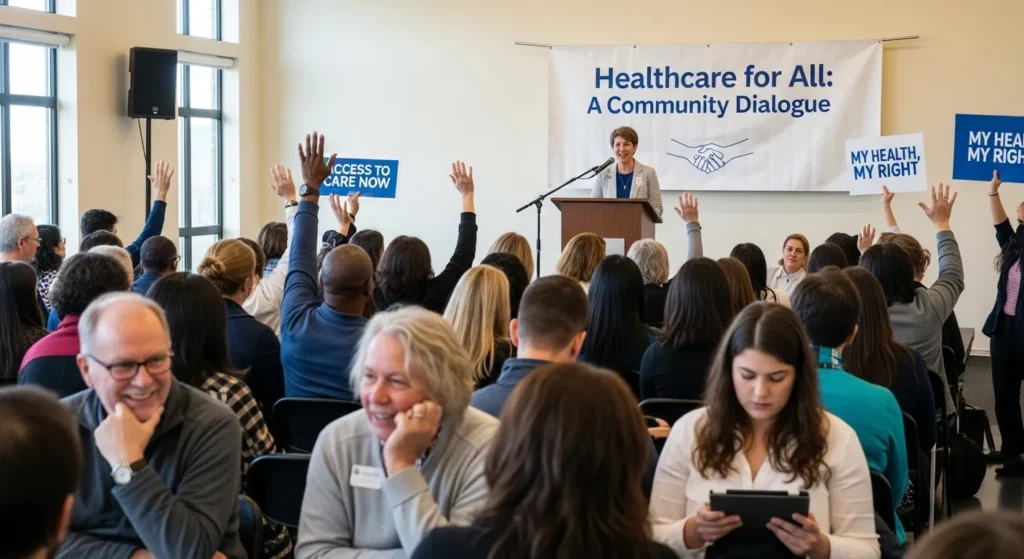
At the community level, advocacy works best when it is concrete. Ask local leaders and state officials specific questions. Which services are most at risk? How many vacancies are open? What expansion plans have been paused? How long can current operations continue without additional stability? General outrage is easy to ignore. Specific local facts are harder to dismiss.
It also helps to ground the conversation in trusted public data. For readers who want a broader reference point, the HRSA Health Centers data page and KFF’s community health center funding analysis are solid starting places for understanding why these centers matter and why uncertainty keeps surfacing in policy debates.
Final Thoughts
Community health center funding 2026 is not just a policy topic. It is a local access topic, a public health topic, and a community stability topic. Short-term extensions may prevent an immediate collapse, but they do not eliminate the uncertainty that weakens hiring, delays planning, and gradually reduces access for the people who depend on these centers most.
That is the core truth CutsHurt.org is built to highlight: cuts do not stay on paper. They move into exam rooms, waiting rooms, school absences, missed medications, crisis visits, and longer drives for care. If leaders want stronger communities, they need to stop treating health-center stability as temporary business and start treating it like essential infrastructure.
Because once local care becomes unreliable, rebuilding trust and capacity is much harder than protecting it in the first place.