
“Budget cuts” sounds like paperwork—until a hospital announces layoffs, a behavioral health program closes, or your community clinic stops taking new patients. In 2026, that disconnect is collapsing fast. Across the country, healthcare systems are warning that funding pressure—especially around Medicaid—can translate into fewer staff, fewer services, and longer waits for care.
That’s why healthcare budget cuts 2026 is a rising, urgent topic: it’s no longer theoretical. When funding shrinks, healthcare doesn’t become “more efficient.” It becomes less available. And for safety-net hospitals, rural communities, and low-income families, “less available” often means “not available at all.”
What’s driving healthcare budget cuts in 2026?
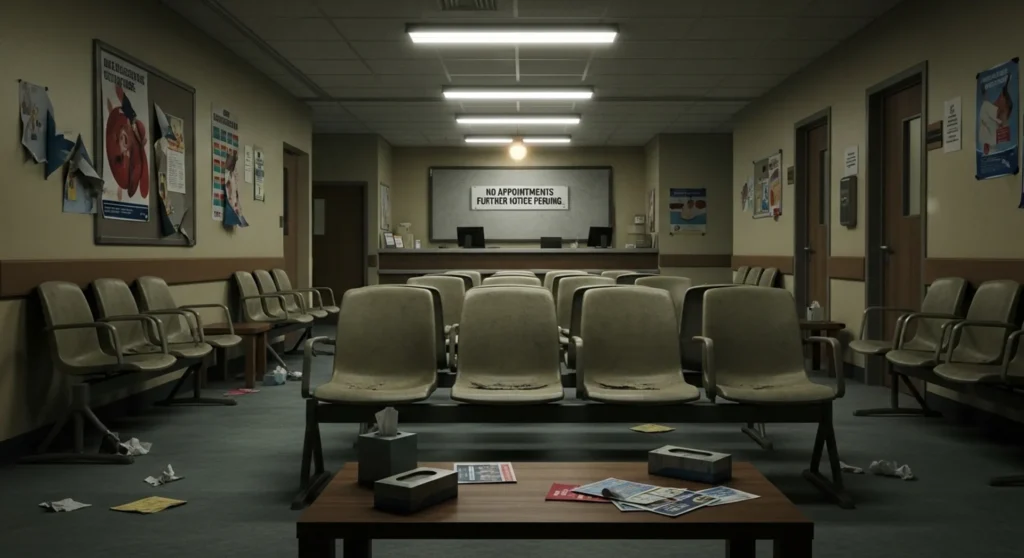
Not every hospital is in the same situation, but a few structural pressures keep showing up:
- Medicaid payment pressure: Safety-net systems rely heavily on Medicaid reimbursement. When payments are cut or reduced, the math is brutal—especially for hospitals already operating on thin margins.
- Rising operating costs: Labor, supplies, and contract staffing remain expensive. When funding doesn’t keep pace, systems start cutting where they can: staffing and services.
- Downstream service reductions: Behavioral health and outpatient programs are often first on the chopping block, even though cutting them usually increases ER use later.
One concrete example making headlines: Alameda Health System in California paused layoffs of nearly 250 workers after county officials stepped in—yet the system still warned its financial crisis remains severe, linked to projected Medicaid-related revenue losses. :contentReference[oaicite:5]{index=5}
Meanwhile, broader policy analysis shows major shifts and constraints in health and healthcare budgets going into 2026—meaning the stress isn’t limited to one county or one state. :contentReference[oaicite:6]{index=6}
Why Medicaid cuts hit harder than people realize
Medicaid isn’t a “nice-to-have” program. It pays for care for low-income adults, children, seniors, and people with disabilities. In many communities, Medicaid is also the financial backbone of the local hospital. When Medicaid payments drop, hospitals don’t have an easy replacement revenue stream.
That’s why healthcare budget cuts in 2026 often show up as:
- Layoffs or buyouts (especially non-clinical and support roles first, then clinical pressure follows)
- Clinic closures or reduced hours
- Fewer behavioral health and outpatient services
- Longer wait times for appointments and procedures
And the worst part: when preventive and outpatient care gets cut, costs don’t disappear. They shift to the ER, to crisis services, and to families. The system becomes more expensive and more chaotic—just less visible on a spreadsheet.
Hospital layoffs are not “internal decisions”—they’re public health events
Layoffs aren’t just about job loss (though that matters). They are also an access-to-care issue. Every “position eliminated” is time taken away from patients: fewer staff to schedule follow-ups, fewer lab techs, fewer therapists, fewer people keeping services running smoothly.
In the Alameda Health System case, planned cuts reportedly included roles like therapists, lab assistants, and phlebotomists—jobs that directly impact patient throughput and basic care capacity. :contentReference[oaicite:7]{index=7}
Even when leaders promise “clinical care won’t be impacted,” systems can’t cut staffing repeatedly without consequences. Delays compound. Backlogs grow. Burnout rises. And eventually, services shrink.
The invisible casualties: mental health, prevention, and community care
Healthcare budget cuts 2026 don’t only threaten hospitals. They squeeze the parts of the system that keep people stable in the first place—community health programs and mental health services.
CutsHurt.org has already documented this pattern in depth. If you haven’t read it yet, start here:
When mental health services are cut, people don’t stop needing help. They just lose access until they hit a breaking point. Then the ER becomes the “provider,” law enforcement becomes the “response team,” and jails become the “treatment facility.” That’s not a healthcare system. That’s a failure pipeline.
Rural communities take the first hit—and the longest recovery
If you want to see healthcare budget cuts 2026 in their clearest form, look at rural America. Many rural counties have one hospital—or one clinic—serving huge areas. When funding tightens, there’s no backup across town.
Cutshurt.org’s rural healthcare breakdown connects the dots clearly:
Rural closures don’t just remove convenience. They remove time. And in emergencies—stroke, heart attack, sepsis—time is survival.
It doesn’t stop at hospitals: research cuts become tomorrow’s health crisis
Healthcare is also a long game. Cutting medical research funding means fewer breakthroughs, fewer clinical trials, and fewer improvements in diagnosis and treatment. That damage takes years to show up—which is exactly why it’s politically easy to cut.
Related internal read:
If you want a system that’s better five years from now, you don’t slash the pipeline that creates better care.
So what can people actually do about healthcare budget cuts in 2026?

Here’s the truth: budgets respond to pressure. Silence is permission. If your community is facing hospital layoffs, clinic cuts, or reduced services, don’t wait until the closure is “official.” By then, it’s usually too late.
Start with action that’s simple, specific, and repeatable:
1) Demand transparency (no vague statements)
- Which services are being reduced?
- How many positions are being cut, and in what departments?
- What’s the funding gap (dollars, timeline, source)?
2) Tie the story to measurable harm
- Travel time increases for care
- Appointment waits (weeks/months)
- Loss of maternity services or behavioral health slots
- ER boarding and staffing shortages
3) Contact elected officials with a clear ask
Not “please help,” but: restore funding, protect Medicaid reimbursement, stabilize safety-net providers, prevent closure of outpatient behavioral health.
If you need a step-by-step playbook, CutsHurt.org already has one:
For federal legislation tracking and official bill text, use Congress.gov. It’s not flashy—but it’s authoritative. :contentReference[oaicite:8]{index=8}
Bottom line
Healthcare budget cuts 2026 is trending because people are watching services shrink in real time—through layoffs, clinic closures, and disappearing mental health support. And once a community loses capacity, it can take years to rebuild.
Budgets are choices. If a community can mobilize to protect access—especially for safety-net and rural providers—then this isn’t inevitable. But it does require pressure, public attention, and relentless specificity.
Because cuts hurt. And pretending they don’t is how the damage spreads.